The Nature: Senses to survive
The phrase: If you ignore the names of things, it also disappears what you know about them. Carl Linnaeus (1707-1778)
Background sound: fishing soundscape: birds, boats, sea, people, etc.
AREA 1: THE OCEANS
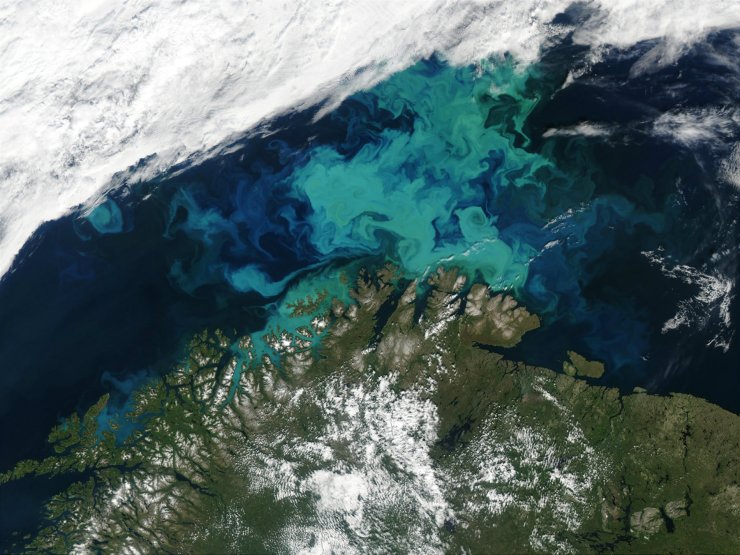
1. Ocean Currents: The Ocean contains 99% of the planet’s living space. Life emerged and evolved in the sea. The temperatures of the oceanic masses vary only slightly, and water salinity (3.5%)
– The temperature of the oceans and land (map)
– Salinity: Fresh water and salt water. 97% of the planet’s water is saltwater. The other 3% is mostly frozen. (picture)
– The sea currents: according to the position of the planet, day and night, the seasons, and the rotation and translation of the Earth, there are various climates, varying according to the seasons and zones. This set of forces and movements causes tides and water currents, depending on the temperature, whether shallow or deep. These forces also cause movement and air currents, depending on height, temperature, and speed. They present as soft breezes or as devastating, deadly typhoons, hurricanes, cyclones, and tornadoes.
Expository Items: start with ‘the wave’ and make a soundtrack introduction to the exhibition:
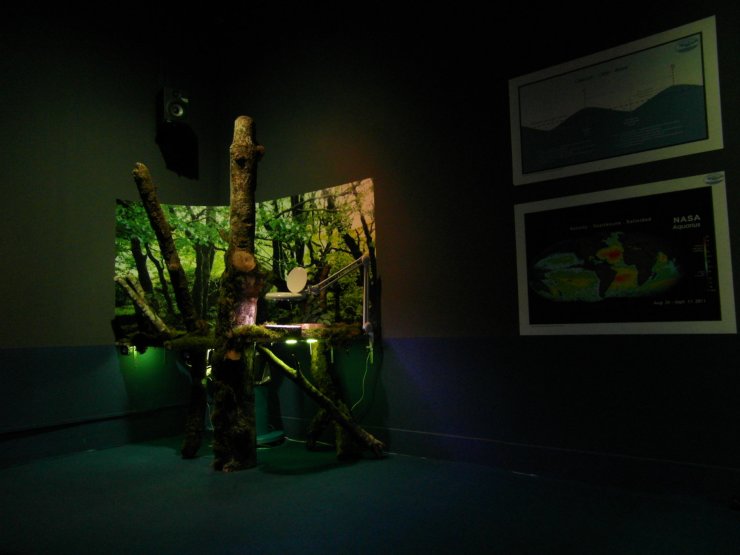
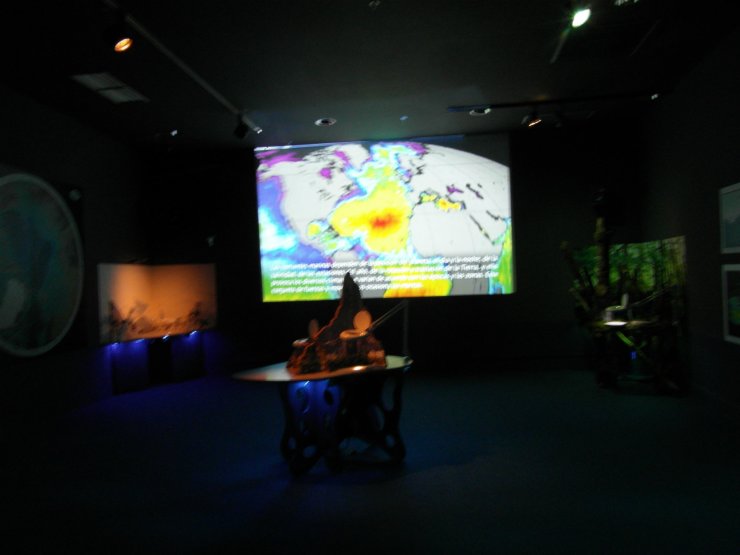
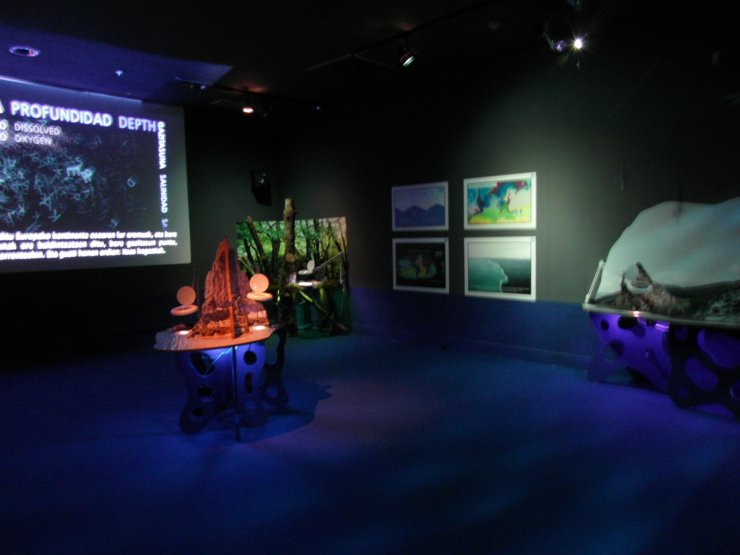
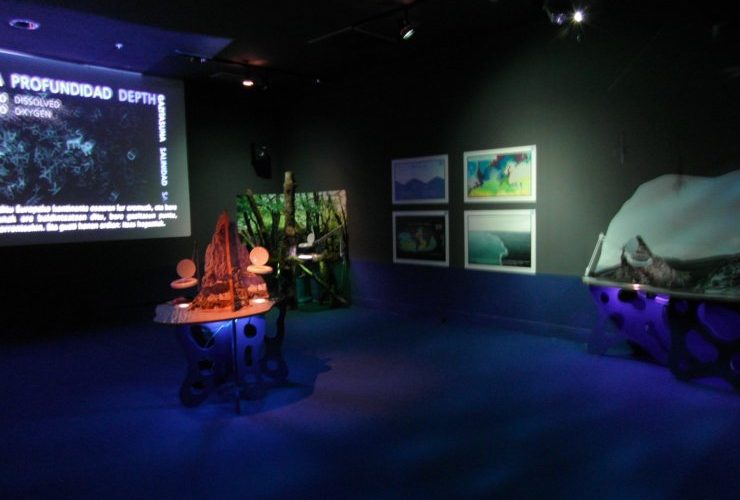
– In one of the walls, 2 National Geographic Maps: ocean currents, water temperatures and onshore winds, with colour changes that make the difference between winter and summer. And a video explaining them, Manuel González (Azti-Tecnalia)
2. The oceans as communication routes. Navigation: Finding our way in the sea. Orient ourselves with the sun and stars: stars at sea and in the sky, astronomy, to learns to find you.
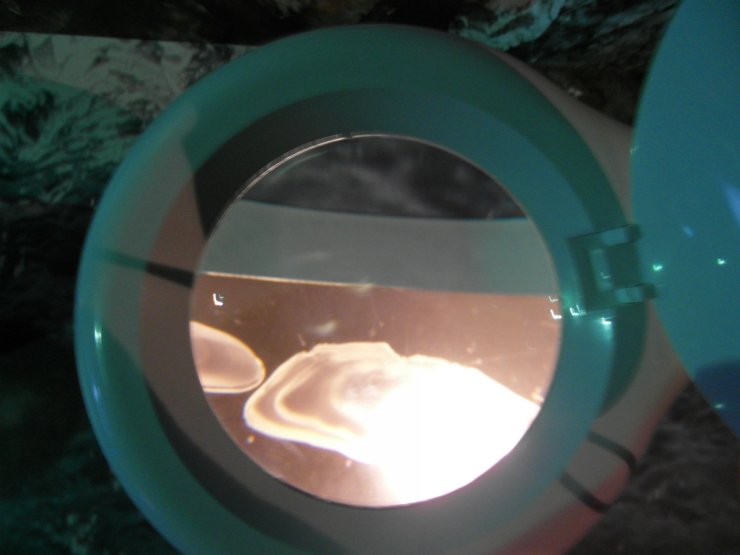
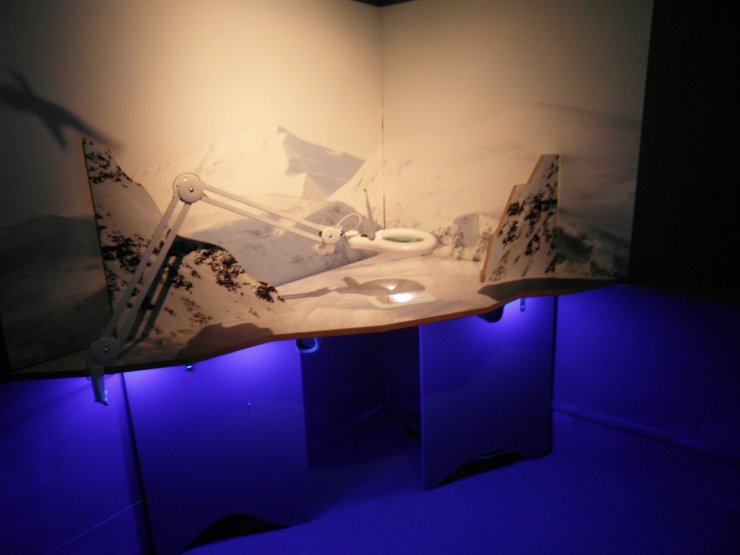
Macrocosm and microcosm: tiny organisms found in every drop of seawater can be observed in the wonderful world revealed by the microscope. And in that same sea, there are also more burly animals that live on the planet. Expository Items: Magnifiers, airships as porthole windows of a ship to see microorganisms as giants, allowing us to see them in different sizes and at various scales.
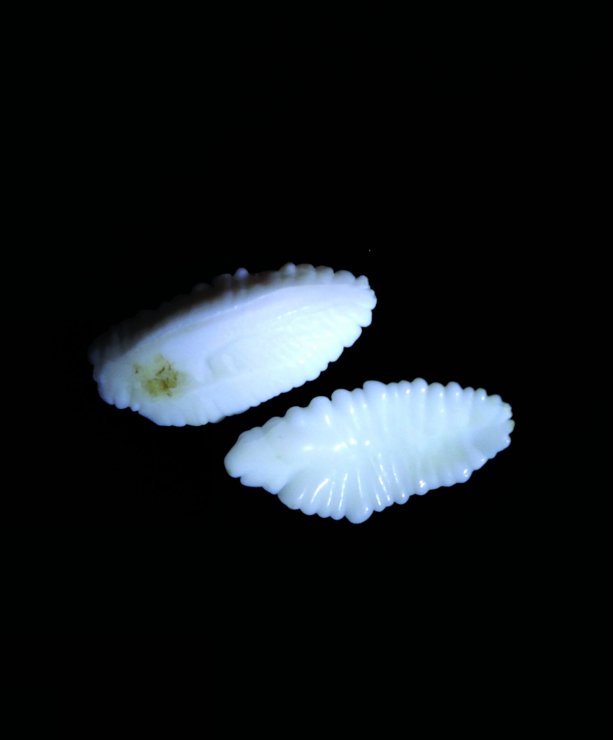
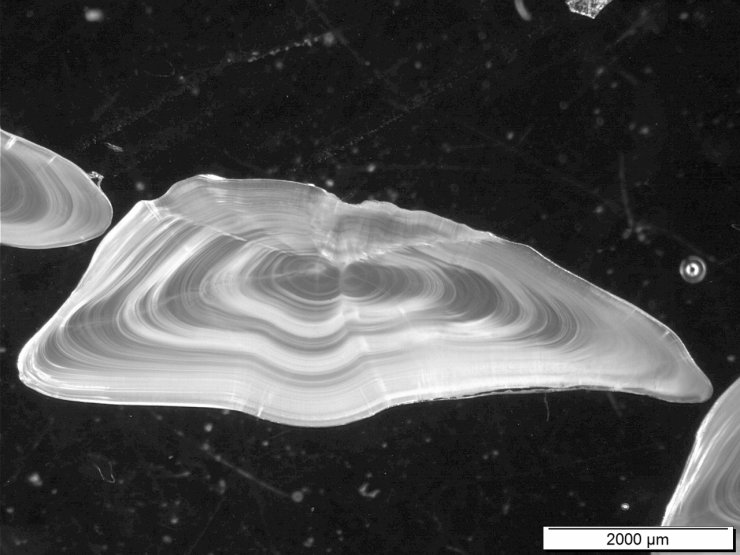
Mandatory: Otolith and photos of eggs and larvae of cod.
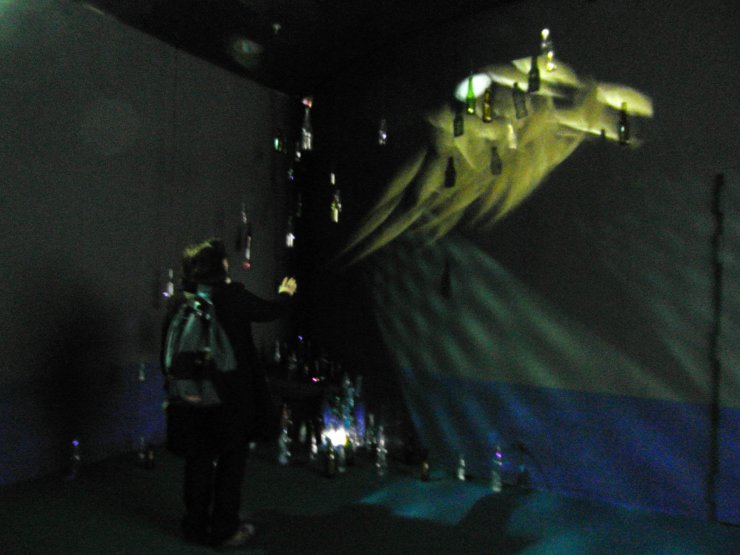
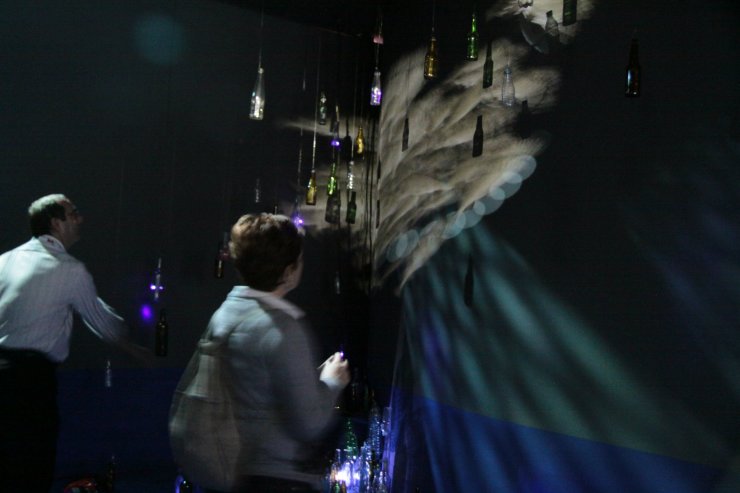
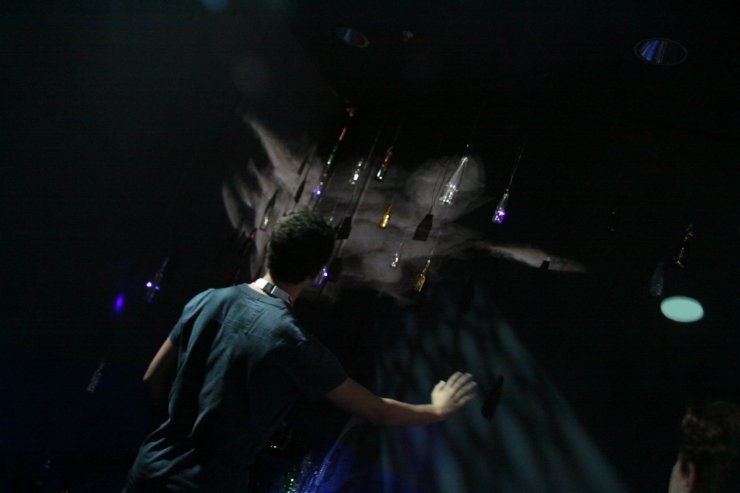
– Overhead, a projection of stars on a Fuller geodesic dome made of black cardboard, projecting Starry Night, November 20, 2003, when the Maritime Museum in Bilbao was opened. Honningsvag and Stavanger will choose the date that they wish to project.
We will post a round dome with 360-degree markings on the roof. We will propose that people reach the North or the South and seek references through the senses: smell, hearing, and touch. Cod, like other fish, is oriented by its otoliths.
Magnifiers will post audio teaching and explain it. I think in the otoliths and circles of tree trunks: touch the trunk and tell its age.
The age of Atlantic cod is determined by counting the growth rings in otoliths, two tiny calcareous elements in the inner ear. These rings, like those of a tree, reveal even the most subtle changes in water temperature, such as a year of freezing water.
– Maritime Soundscape
– Pressure sensors, water presence, and diffusers
– Smell of the sea
– Touch: logs of different woods and an explanation. Another way of reading. Read in nature.
AREA 2: THE ENVIRONMENT
1. Landscape, cliffs and beaches in the Arctic and the Atlantic coast, types of algae, drying, salinity, banks, farms.
Expository Items: landscape pictures on textures, colours, smells … not saying places… and guess with what they knew. And then with what they already know.
2. Flora and Fauna: The same ocean sets land boundaries, all around the European continent, and determines the flora and fauna along the coasts washed by the sea, with its Salinity, points of different temperatures and the currents that soften some highs. And amid all: seabirds.
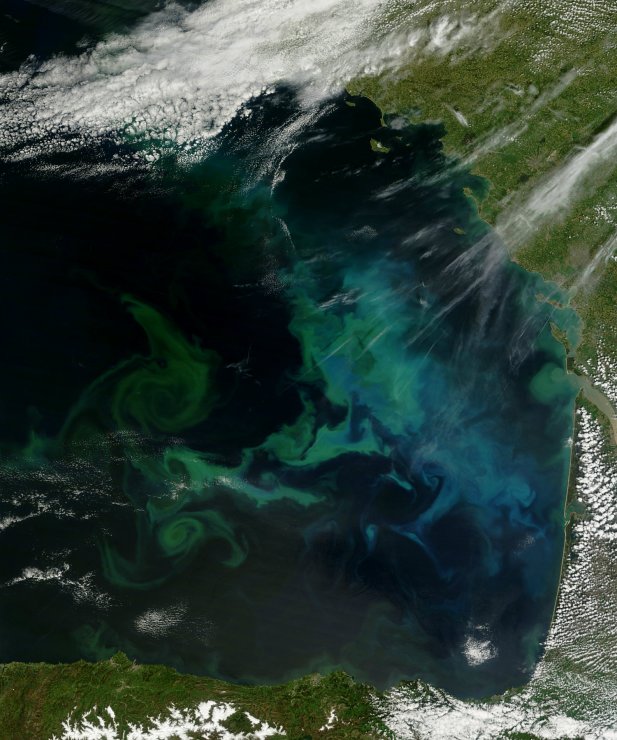
The marine flora and fauna depend on light, depth, temperature, salinity, dissolved oxygen, tides, currents, nutrient concentration, bottom type, distance from shore, and distance to the bottom…
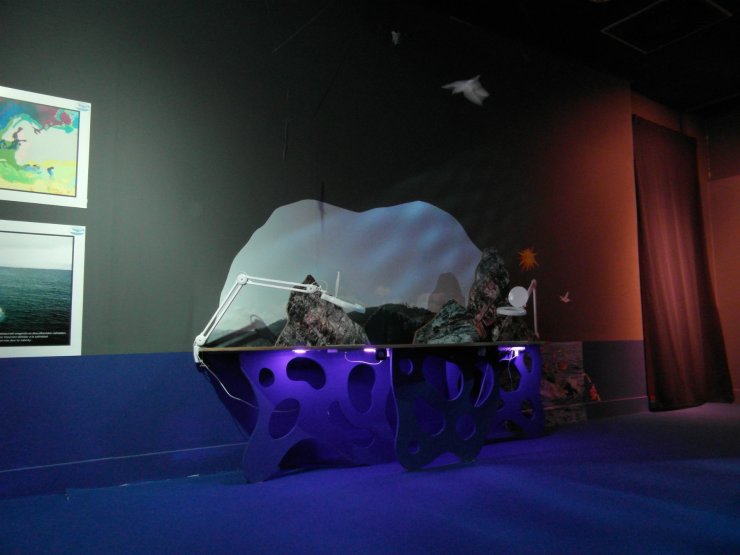
Expository Items: birds wall: The idea is to simulate two rocky walls, one is a cliff in the Arctic and the other a coastal cliff in Bizkaia, with images of birds cut and placed on foam board, by way of stickers … composing a painting in relief with varying distances, but on a rock photo. With the birds we see most often on the Norwegian coast and in our area, we have already contacted the Society of Ornithologists, which has sent us pictures of birds from both cliffs and the sounds of the birds.
3. Biodiversity and ecosystems: Biodiversity is the key to tackling some of the world’s biggest challenges: climate change, sustainable development and food security. There are areas of great ecological value that must remain active for future generations. In addition to rising temperatures and decreasing sea ice in the Northern region, there will be an increase in industrial activities in the area (e.g., oil and gas industries and shipping).
Natural capital, comprising ecosystems, biodiversity, and natural resources, sustains the economy, society, and individual welfare.
– Aquatic Ecosystems: depending on the water: fresh/salty, and marine ecosystems: sandy, rocky, sea coast and open sea, to which they belong different fish
– Seasonality of renewable natural resources: the months of spawning and rearing, ban, etc…
Expository Items: Something similar to: http://oceanexplorer.noaa.gov/
4. Similarities and differences with other fish:
– Difference between freshwater fish and saltwater fish
– Difference between white fish and oily fish
– Difference between deep-sea fish and surface waters
– Differences between fish and shellfish
Expository Items: An animation with «spot the differences» or puzzle pieces that only fit in the correct answer. Or wooden pieces that make up an accurate figure if grouped corresponding to the same category … (learn the basics of classification, first step of scientific knowledge):
AREA 3: THE COD
1. Technical details of the cod and its records: Besides its chemical and nutritional composition, it is good to know its measurements and its records. It measures from 35 cm to 2 meters, with an average length of 1 m. Its weight varies from 3 to 100 kg, with a maximum weight of 96 kg, and the maximum age is 25 years. During the autumn, pelagic habitats sink to the bottom, which suggests to some scientists that cods hibernate.
Expository Items: Round tube, transparent and from floor to ceiling, with the percentages of their chemical composition: Magnesium, water, potassium, etc.. and a second tube in comparative format with the chemical composition of the human body. Panel with photos of some spectacular specimens. Find similarities between cod and other species of fish, or between cod and other elements in nature.
2. External anatomy of cod: Type skeleton, its head, teeth, eyes, tongue, Kokotxa, etc. The body: the caudal peduncle, types of fins, tail, shape and purpose, the skin, the shape of the scales, spines and rays, how they swim, how they float and rise to the surface and descend to the depths of the ocean, and different body colours. The lateral line, form, and purpose of cod and other fish are on the sides of the body, with a «sideline» that allows them to detect movement in the water. The lateral line can also help even know where they are in the currents.
Expository Items: I think of a 3D game in which you have to perform three movements: horizontal circular, circular lateral, circular vertical and go in a straight line. It is probably worth developing an app that can be downloaded.
3. Internal Anatomy: swim bladder, respiratory system, water balance, the digestive system, the liver, nervous system, brain and cerebellum, circulatory system, muscular system, the senses, the sensorial apparatus itself, inner ear, smell, etc. The otoliths: the black box of cod and of the ocean!
Expository Items: a board with a matrix of turntables to provide information for each item, its value, its location and its image
4. Parts of cod: leather, gelatin, meat, scrape, kokotxas, roe, liver, intestine, otoliths: cod black box.
Expository Items: Explanatory panels, photographs, textures, videos and soundscapes.
5. Its scenario: adaptation to the environment, including its movement and how, banks, migration, qualities depending on the salinity, the effect of temperature on growth, etc. The Atlantic cod can change colour at specific depths. The cod has two colour phases: grey-green and reddish-brown.
Expository Items: Stroboscopic light games
6. It’s feeding: The food chain is a nutrient and energy exchange between species in an ecosystem. The cod can eat their pups; they are active hunters, feeding on sand eels, whiting, haddock, small cod, squid, crabs, lobsters, mussels, worms, mackerel, and other molluscs.
Moreover, the gradual disappearance of high-trophic-level predators, such as Atlantic cod (Gadus morhua), can alter the composition and abundance of seabed communities. Therefore, direct and indirect forms of human intervention can affect biodiversity on small and large spatial scales.
Expository Items: Play with sensors and an Arduino board
7. How to is reproduced: Distribution and spawning areas. How often and how many eggs are laid, how they mate, and where, both geographically and locally. Number of cod eggs. Seasonality. Success, concentration, etc.
Expository Items: Maps and explanatory video of women scientists…
8. The Skrei: and its special organoleptic characteristics. They migrate from the cold waters of the Barents Sea in Norway to the Lofoten Islands, where they spawn. In these islands, it is captured in the colder months of the year. The skrei need to accumulate fat, which causes it to have special organoleptic characteristics, such as a more intense flavor and a juicier meat The long journey that takes, makes the fish increase their muscle, which provides to the white meat a texture smoother, and an exceptional white pearly luster In addition, food that feeds mainly seafood, minerals gives that are manifested in its flavor.
Expository Items: Explanatory panels, photographs, videos and soundscape textures.